Create an exactly 25-second vertical 9:16 photorealistic fashion-transition video showing the evolution of women’s fashion through different years. The entire video takes place around one elevator. At every new floor, the elevator doors open and reveal

Видео-обложка

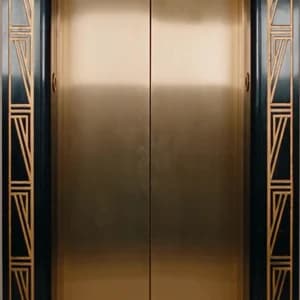
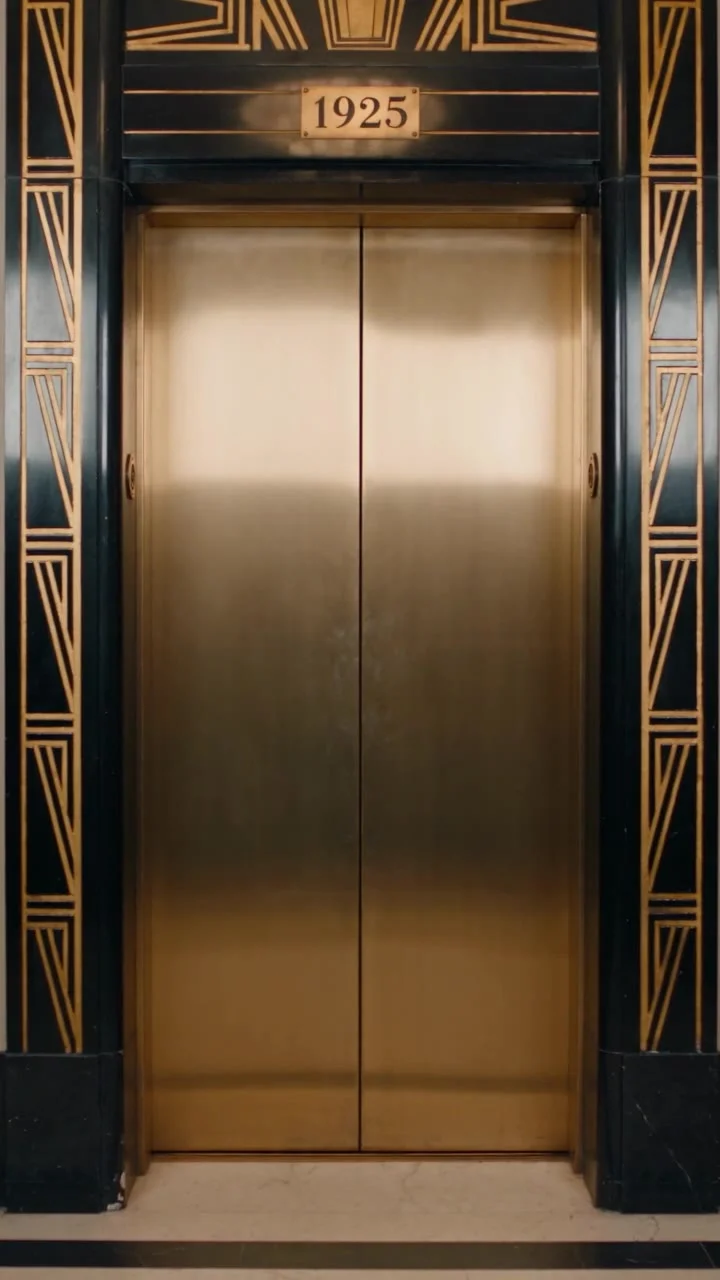
Create an exactly 25-second vertical 9:16 photorealistic fashion-transition video showing the evolution of women’s fashion through different years. The entire video takes place around one elevator. At every new floor, the elevator doors open and reveal the same woman in a historically accurate outfit from a different era. Between floors, the camera rapidly travels vertically upward past the elevator façade, creating seamless hidden transitions similar to the supplied video reference. IDENTITY REFERENCE @image_1 is the only identity reference for the woman. Preserve her exact facial identity throughout all eras: same face shape, same eyes, same nose, same lips, same eyebrows, same skin tone, same distinctive facial features, same age, same height, same body proportions. She is one continuous person throughout the entire video. She must not become a different model, younger or older. Do not average, beautify or reinterpret her face. The fashion, accessories and hairstyle may change, but her facial anatomy, hair color and recognizable identity must remain completely unchanged. FORMAT AND STYLE Exactly 25 seconds. Vertical 9:16. Premium photorealistic fashion commercial. One continuous visual journey. Symmetrical frontal composition. Elevator doorway remains centred. Natural human motion. Historically accurate fashion details. Real fabric texture, seams, jewellery, footwear and accessories. Clean cinematic lighting with realistic reflections on the metal elevator. No collage appearance and no visible character morphing. The outfit and environment change only while the elevator doors are completely closed or while the camera passes behind an architectural beam. Never transform the woman’s clothes, body or face visibly in front of the camera. Only five written elements are allowed: the year displays “1925”, “1955”, “1975”, “1995” and “2026”. Each year consists of exactly four digits and appears only on the illuminated floor display above the elevator. TIMELINE 0.00–1.20 — OPENING Begin with a perfectly centred view of closed brass elevator doors inside an elegant neutral gallery. The camera slowly pushes forward. The illuminated display above the doors reads exactly: “1925” A soft elevator bell rings. The doors open smoothly. 1.20–4.60 — YEAR 1925 The same woman from @image_1 stands inside an Art Deco elevator. She wears an elegant historically accurate 1925 evening outfit: a black knee-length beaded flapper dress with delicate geometric embroidery, long pearl necklace, satin shoes, small evening bag and refined Art Deco earrings. Her original hair color is preserved; her hair is arranged in a soft period-inspired waved style without changing its natural length or hairline. The surrounding floor has polished black-and-gold Art Deco walls, geometric brass decorations and warm globe lights. She walks naturally toward the elevator threshold, pauses confidently and makes one small elegant movement with her handbag. Fabric, beads and jewellery move naturally. She remains centred and looks briefly toward the camera. She steps safely back inside. The doors close completely. 4.60–5.70 — VERTICAL TRANSITION The camera performs a rapid but smooth vertical rise following the elevator upward. A horizontal architectural beam briefly covers the entire frame. During this complete visual occlusion, change the year, outfit and floor design. No flash, particles, dissolve or visible morphing. 5.70–9.00 — YEAR 1955 The camera settles in front of the same elevator. The year display reads exactly: “1955” The bell rings and the doors open. The same woman appears with precisely the same face, age and proportions. She wears an elegant 1955 New Look ensemble: an ivory fitted blouse, defined waist, full calf-length emerald skirt, short gloves, pearl earrings, structured handbag and classic low-heeled pumps. Her hair color and identity remain unchanged; her hair is styled into polished period waves. The hallway resembles a refined 1950s hotel lobby with pastel walls, walnut details, warm lamps and a patterned floor. She takes one natural step toward the threshold, lightly adjusts one glove and smiles subtly. Clothing has realistic weight and folds. Her hands remain anatomically correct. She returns inside and the doors close. 9.00–10.10 — VERTICAL TRANSITION The camera rises rapidly with the elevator again. The frame passes behind another solid architectural divider, hiding the environmental and costume change completely. 10.10–13.40 — YEAR 1975 The illuminated display reads exactly: “1975” The doors open to reveal the same woman in authentic mid-1970s fashion: a rich burnt-orange fitted blouse, high-waisted dark-blue flared trousers, platform shoes, gold hoop earrings, several slim bracelets and a small suede shoulder bag. Her hair retains the same color, length and hairline but is styled with natural 1970s volume. The floor has warm mustard walls, dark wood, graphic patterns, large indoor plants and soft amber lighting. She walks to the threshold with a confident 1970s runway rhythm, places one hand naturally on her hip and gently turns her head. Her trousers, hair and shoulder-bag strap respond naturally to movement. She steps back. The doors close fully. 13.40–14.50 — VERTICAL TRANSITION Another seamless upward camera movement. The elevator façade and a passing structural beam fill the frame. All changes happen only behind this full-frame obstruction. 14.50–17.80 — YEAR 1995 The display reads exactly: “1995” The same woman appears in a realistic minimalist 1990s outfit: oversized charcoal blazer, fitted white top, straight high-waisted blue jeans, slim black belt, pointed ankle boots, small black shoulder bag and understated silver earrings. Preserve her exact face and natural skin texture. Her hair remains the same color and length, styled in a smooth 1990s blowout. The hallway becomes a clean 1990s corporate interior with cream stone walls, chrome accents, glass blocks and soft neutral lighting. She walks naturally toward the camera, adjusts the blazer lapel and gives a calm confident look. No exaggerated posing. She returns inside and the doors close. 17.80–18.90 — FINAL VERTICAL TRANSITION The camera rises one final time. A wide ceiling beam crosses and completely covers the frame, creating a clean physical transition into the present day. 18.90–23.20 — YEAR 2026 The display reads exactly: “2026” The elevator doors open. The same woman from @image_1 appears in a sophisticated contemporary 2026 fashion look: a sculptural cobalt-blue tailored suit with an asymmetric jacket, elegant fitted top, wide-leg trousers, metallic minimalist jewellery, a geometric handbag and refined pointed shoes. The design is modern and fashionable but physically wearable, not science fiction. The environment is a premium contemporary gallery with warm white stone, brushed metal, subtle architectural lighting and one sculptural object. She confidently walks out of the elevator toward the camera. The camera performs a gentle backward movement while preserving her centred composition. She makes direct eye contact with the lens. Her face remains exactly identical to every previous era. 23.20–25.00 — ENDING The woman stops close to the camera and turns slightly, presenting the final modern outfit. Behind her, the elevator doors close smoothly. Hold her recognizable face and complete outfit steadily for the final second. End on a clean fashion portrait. No final title card and no additional text. CAMERA RULES Maintain a symmetrical frontal viewpoint at every elevator stop. Use one continuous camera language: slow push toward opening doors, short controlled character movement, rapid vertical travel between floors, smooth settling at the next elevator. Transitions must be hidden by closed doors or solid architectural beams. Do not use visible morphing, flashes, smoke, particles or digital glitches. During every new era, reproduce the same camera height, lens perspective and approximate position of the woman so the transition feels deliberate and smooth. MOVEMENT The woman moves naturally with realistic body weight. Correct walking cycles, stable feet, correct contact with the floor, subtle breathing and blinking. Hands and fingers remain anatomically correct. Bags hang with real weight. Jewellery, hair and clothing react naturally to her steps. Do not make all poses identical. Give each era a subtle period-appropriate attitude while preserving the same identity and personality. TEXT CONTROL The only visible text is: “1925” “1955” “1975” “1995” “2026” Each year appears centred on the elevator display above the doors. Use four clear stable digits. Never misspell, reorder, mirror, duplicate or mutate the numbers. Do not display two years simultaneously. No other letters, words, logos, signs, subtitles or watermarks. SOUND DESIGN No dialogue. Use one evolving fashion soundtrack that changes instrumentation with each era while maintaining one continuous rhythm: 1925: subtle jazz percussion and piano. 1955: elegant orchestral pop rhythm. 1975: warm disco bass and soft percussion. 1995: restrained electronic fashion beat. 2026: clean modern bass and polished electronic texture. Every elevator arrival has one clear bell sound. Add realistic door mechanisms, footsteps, fabric movement, jewellery and handbag sounds. The vertical transitions are supported by a short mechanical rising sound synchronized with the camera movement. ABSOLUTE PRIORITIES 1. @image_1 remains the exact same woman in every era. 2. Never change her face, ethnicity, age, height or body proportions. 3. Only fashion, hairstyle arrangement, accessories and environment change. 4. Preserve the same hair color, natural length and hairline. 5. Outfit changes occur only behind fully closed doors or complete frame occlusion. 6. Historically accurate fashion for 1925, 1955, 1975 and 1995. 7. One coherent elevator and stable spatial geometry. 8. Exact readable year displays. 9. Natural movement and photorealistic materials. 10. No visible AI transformation. NEGATIVE CONSTRAINTS No identity drift, no different women, no face replacement, no aging, no de-aging, no changing ethnicity, no changing facial proportions, no changing eye color, no changing hair color, no altered hairline and no body transformation. No visible costume morphing, no clothes growing over the body, no liquid transformation, no magical particles, no flashes, no teleportation and no dissolve between characters. No extra fingers, merged hands, broken wrists, warped legs, sliding feet, floating accessories, deformed handbags, changing jewellery or fabric passing through the body. No distorted elevator, changing doorway dimensions, moving walls, broken doors, duplicated buttons or impossible reflections. No random text, no incorrect years, no mirrored numbers, no subtitles, no logos, no watermark and no social-media interface. No cartoon, illustration, CGI, video-game appearance, plastic skin, excessive retouching, artificial beauty filter, extreme saturation or collage.
Create an exactly 25-second vertical 9:16 photorealistic fashion-transition video showing the evolution of women’s fashion through different years. The entire video takes place around one elevator. At every new floor, the elevator doors open and reveal

Create an exactly 25-second …

Seedance 2.5
ПРОМПТ

Create an exactly 25-second vertical 9:16 photorealistic fashion-transition video showing the evolution of women’s fashion through different years. The entire video takes place around one elevator. At every new floor, the elevator doors open and reveal the same woman in a historically accurate outfit from a different era. Between floors, the camera rapidly travels vertically upward past the elevator façade, creating seamless hidden transitions similar to the supplied video reference. IDENTITY REFERENCE @image_1 is the only identity reference for the woman. Preserve her exact facial identity throughout all eras: same face shape, same eyes, same nose, same lips, same eyebrows, same skin tone, same distinctive facial features, same age, same height, same body proportions. She is one continuous person throughout the entire video. She must not become a different model, younger or older. Do not average, beautify or reinterpret her face. The fashion, accessories and hairstyle may change, but her facial anatomy, hair color and recognizable identity must remain completely unchanged. FORMAT AND STYLE Exactly 25 seconds. Vertical 9:16. Premium photorealistic fashion commercial. One continuous visual journey. Symmetrical frontal composition. Elevator doorway remains centred. Natural human motion. Historically accurate fashion details. Real fabric texture, seams, jewellery, footwear and accessories. Clean cinematic lighting with realistic reflections on the metal elevator. No collage appearance and no visible character morphing. The outfit and environment change only while the elevator doors are completely closed or while the camera passes behind an architectural beam. Never transform the woman’s clothes, body or face visibly in front of the camera. Only five written elements are allowed: the year displays “1925”, “1955”, “1975”, “1995” and “2026”. Each year consists of exactly four digits and appears only on the illuminated floor display above the elevator. TIMELINE 0.00–1.20 — OPENING Begin with a perfectly centred view of closed brass elevator doors inside an elegant neutral gallery. The camera slowly pushes forward. The illuminated display above the doors reads exactly: “1925” A soft elevator bell rings. The doors open smoothly. 1.20–4.60 — YEAR 1925 The same woman from @image_1 stands inside an Art Deco elevator. She wears an elegant historically accurate 1925 evening outfit: a black knee-length beaded flapper dress with delicate geometric embroidery, long pearl necklace, satin shoes, small evening bag and refined Art Deco earrings. Her original hair color is preserved; her hair is arranged in a soft period-inspired waved style without changing its natural length or hairline. The surrounding floor has polished black-and-gold Art Deco walls, geometric brass decorations and warm globe lights. She walks naturally toward the elevator threshold, pauses confidently and makes one small elegant movement with her handbag. Fabric, beads and jewellery move naturally. She remains centred and looks briefly toward the camera. She steps safely back inside. The doors close completely. 4.60–5.70 — VERTICAL TRANSITION The camera performs a rapid but smooth vertical rise following the elevator upward. A horizontal architectural beam briefly covers the entire frame. During this complete visual occlusion, change the year, outfit and floor design. No flash, particles, dissolve or visible morphing. 5.70–9.00 — YEAR 1955 The camera settles in front of the same elevator. The year display reads exactly: “1955” The bell rings and the doors open. The same woman appears with precisely the same face, age and proportions. She wears an elegant 1955 New Look ensemble: an ivory fitted blouse, defined waist, full calf-length emerald skirt, short gloves, pearl earrings, structured handbag and classic low-heeled pumps. Her hair color and identity remain unchanged; her hair is styled into polished period waves. The hallway resembles a refined 1950s hotel lobby with pastel walls, walnut details, warm lamps and a patterned floor. She takes one natural step toward the threshold, lightly adjusts one glove and smiles subtly. Clothing has realistic weight and folds. Her hands remain anatomically correct. She returns inside and the doors close. 9.00–10.10 — VERTICAL TRANSITION The camera rises rapidly with the elevator again. The frame passes behind another solid architectural divider, hiding the environmental and costume change completely. 10.10–13.40 — YEAR 1975 The illuminated display reads exactly: “1975” The doors open to reveal the same woman in authentic mid-1970s fashion: a rich burnt-orange fitted blouse, high-waisted dark-blue flared trousers, platform shoes, gold hoop earrings, several slim bracelets and a small suede shoulder bag. Her hair retains the same color, length and hairline but is styled with natural 1970s volume. The floor has warm mustard walls, dark wood, graphic patterns, large indoor plants and soft amber lighting. She walks to the threshold with a confident 1970s runway rhythm, places one hand naturally on her hip and gently turns her head. Her trousers, hair and shoulder-bag strap respond naturally to movement. She steps back. The doors close fully. 13.40–14.50 — VERTICAL TRANSITION Another seamless upward camera movement. The elevator façade and a passing structural beam fill the frame. All changes happen only behind this full-frame obstruction. 14.50–17.80 — YEAR 1995 The display reads exactly: “1995” The same woman appears in a realistic minimalist 1990s outfit: oversized charcoal blazer, fitted white top, straight high-waisted blue jeans, slim black belt, pointed ankle boots, small black shoulder bag and understated silver earrings. Preserve her exact face and natural skin texture. Her hair remains the same color and length, styled in a smooth 1990s blowout. The hallway becomes a clean 1990s corporate interior with cream stone walls, chrome accents, glass blocks and soft neutral lighting. She walks naturally toward the camera, adjusts the blazer lapel and gives a calm confident look. No exaggerated posing. She returns inside and the doors close. 17.80–18.90 — FINAL VERTICAL TRANSITION The camera rises one final time. A wide ceiling beam crosses and completely covers the frame, creating a clean physical transition into the present day. 18.90–23.20 — YEAR 2026 The display reads exactly: “2026” The elevator doors open. The same woman from @image_1 appears in a sophisticated contemporary 2026 fashion look: a sculptural cobalt-blue tailored suit with an asymmetric jacket, elegant fitted top, wide-leg trousers, metallic minimalist jewellery, a geometric handbag and refined pointed shoes. The design is modern and fashionable but physically wearable, not science fiction. The environment is a premium contemporary gallery with warm white stone, brushed metal, subtle architectural lighting and one sculptural object. She confidently walks out of the elevator toward the camera. The camera performs a gentle backward movement while preserving her centred composition. She makes direct eye contact with the lens. Her face remains exactly identical to every previous era. 23.20–25.00 — ENDING The woman stops close to the camera and turns slightly, presenting the final modern outfit. Behind her, the elevator doors close smoothly. Hold her recognizable face and complete outfit steadily for the final second. End on a clean fashion portrait. No final title card and no additional text. CAMERA RULES Maintain a symmetrical frontal viewpoint at every elevator stop. Use one continuous camera language: slow push toward opening doors, short controlled character movement, rapid vertical travel between floors, smooth settling at the next elevator. Transitions must be hidden by closed doors or solid architectural beams. Do not use visible morphing, flashes, smoke, particles or digital glitches. During every new era, reproduce the same camera height, lens perspective and approximate position of the woman so the transition feels deliberate and smooth. MOVEMENT The woman moves naturally with realistic body weight. Correct walking cycles, stable feet, correct contact with the floor, subtle breathing and blinking. Hands and fingers remain anatomically correct. Bags hang with real weight. Jewellery, hair and clothing react naturally to her steps. Do not make all poses identical. Give each era a subtle period-appropriate attitude while preserving the same identity and personality. TEXT CONTROL The only visible text is: “1925” “1955” “1975” “1995” “2026” Each year appears centred on the elevator display above the doors. Use four clear stable digits. Never misspell, reorder, mirror, duplicate or mutate the numbers. Do not display two years simultaneously. No other letters, words, logos, signs, subtitles or watermarks. SOUND DESIGN No dialogue. Use one evolving fashion soundtrack that changes instrumentation with each era while maintaining one continuous rhythm: 1925: subtle jazz percussion and piano. 1955: elegant orchestral pop rhythm. 1975: warm disco bass and soft percussion. 1995: restrained electronic fashion beat. 2026: clean modern bass and polished electronic texture. Every elevator arrival has one clear bell sound. Add realistic door mechanisms, footsteps, fabric movement, jewellery and handbag sounds. The vertical transitions are supported by a short mechanical rising sound synchronized with the camera movement. ABSOLUTE PRIORITIES 1. @image_1 remains the exact same woman in every era. 2. Never change her face, ethnicity, age, height or body proportions. 3. Only fashion, hairstyle arrangement, accessories and environment change. 4. Preserve the same hair color, natural length and hairline. 5. Outfit changes occur only behind fully closed doors or complete frame occlusion. 6. Historically accurate fashion for 1925, 1955, 1975 and 1995. 7. One coherent elevator and stable spatial geometry. 8. Exact readable year displays. 9. Natural movement and photorealistic materials. 10. No visible AI transformation. NEGATIVE CONSTRAINTS No identity drift, no different women, no face replacement, no aging, no de-aging, no changing ethnicity, no changing facial proportions, no changing eye color, no changing hair color, no altered hairline and no body transformation. No visible costume morphing, no clothes growing over the body, no liquid transformation, no magical particles, no flashes, no teleportation and no dissolve between characters. No extra fingers, merged hands, broken wrists, warped legs, sliding feet, floating accessories, deformed handbags, changing jewellery or fabric passing through the body. No distorted elevator, changing doorway dimensions, moving walls, broken doors, duplicated buttons or impossible reflections. No random text, no incorrect years, no mirrored numbers, no subtitles, no logos, no watermark and no social-media interface. No cartoon, illustration, CGI, video-game appearance, plastic skin, excessive retouching, artificial beauty filter, extreme saturation or collage.

UNISET

ИСТОРИЯ